Managing Platforms
Create different platforms to test builds against. A "platform" defines a specific configuration that is used to test software components or builds to deliver high-quality products.
Web applications platforms might be based on different combinations of OS and Browsers: Windows+IE8, Windows+FF, MacOS+FF, etc.
Mobile applications might require combinations like: AT&T+IPhone 4G, Vodafone+IPhone 4G, Airtel+IPhone 4G, etc.
Add Platforms
The default "No Platform" platform is available when creating a new project.
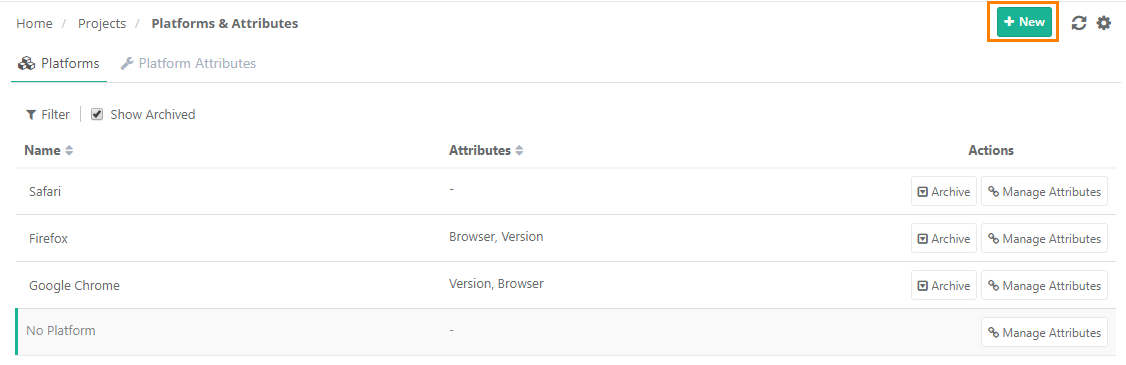
Add more platforms from Platforms under Projects.
Expand the Projects section and open the Platforms & Attributes sub-section.
Open the tab.
Edit Platforms
Go to Platforms under Projects.
Hover the mouse over the Platform to modify.
Click the cell to change the Platform name.
Link Platforms to Test Suite
To link platforms to test suite, perform these steps:
Go to the Test Suite module.
Open the Test Suite details page.
Add platforms from .
Open the Platforms tab and click Link.
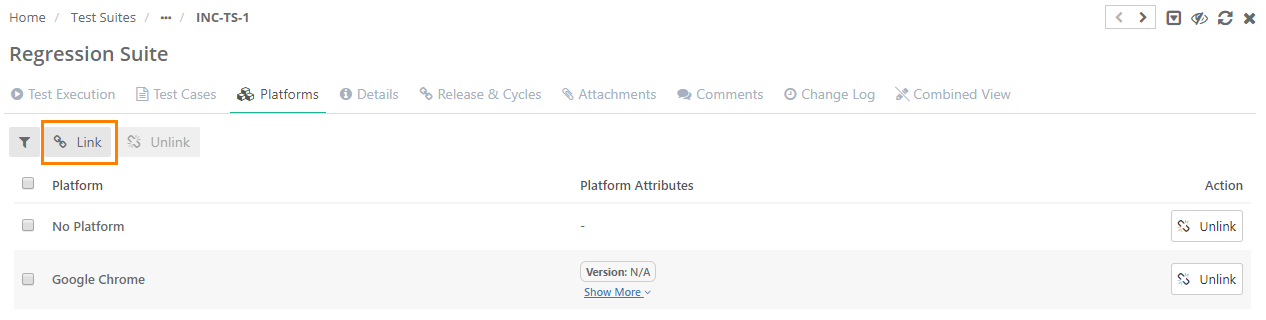
Select the platforms and click .
To link a new platform, click .
Archive and Delete Platforms
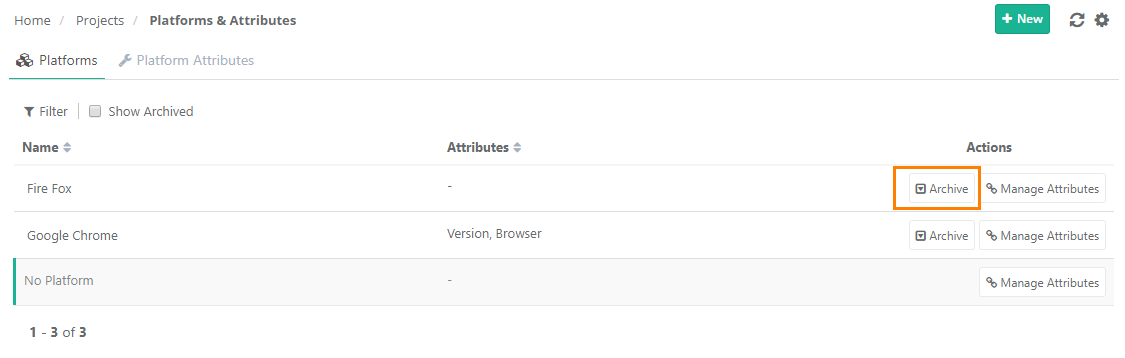
You can archive platforms that are no longer needed.
Archived platforms do not appear on the Link Platform screen in the Test Suite module.
Note
| You cannot archive the default platform "No Platform". |
| If you delete a platform linked to a test suite, and those test suites have already been executed, you cannot perform any actions on the execution screen of the related test runs. |
 |
Unarchive or delete archived platforms. On the Platforms screen, select the Show Archived check box.
Delete Platforms
Delete a platform by clicking .
Unarchive Platforms
To unarchive an archived platform, click .
Sharing Platforms
Share platforms to copy the Platform values from a source project to multiple destination projects.
Use Case: The project admin wants to reuse the existing Platform values of one project in multiple projects so that they do not have to manually add the Platform values in each project and maintain them separately.
Required Permissions: The user should have the following permissions to create or modify Platforms:
Source or Destination | Permissions |
|---|---|
Source Project (The Project from where the platforms is copied) |
|
Destination Project (The Project where the platforms is created) |
|
Import Platforms from Other Projects
To import platforms, perform the following steps:
Go to Platforms tab.
Click .
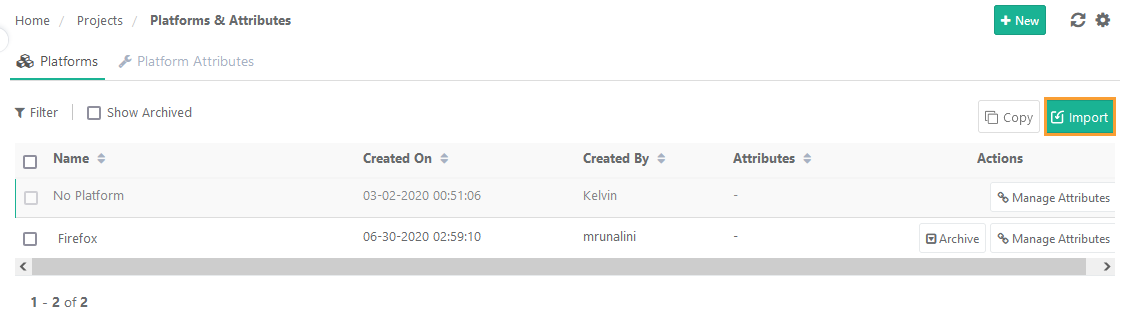
Select the Project to import the Platforms.
Import only the Platforms: Import only platforms; platform attributes are not included.
Import Platforms and their associated Platform Attributes: Import selected platforms along with their associated platform attributes, including the values for Tag at Runtime, Is Mandatory, and Default Value. This option is disabled if the user does not have Customization “View” and “Modify” permissions.
Select the Platform values to import in the existing project.
Note
Select a maximum of 50 platforms at a time.
Click .
Track the progress in the Scheduled Task section.
Copy Platforms to Other Projects
To copy platforms to other projects, perform the following steps:
Go to Project and open the Platform tab.
Select the Platform values and click Copy.
Note
Select a maximum of 50 Platforms at a time.
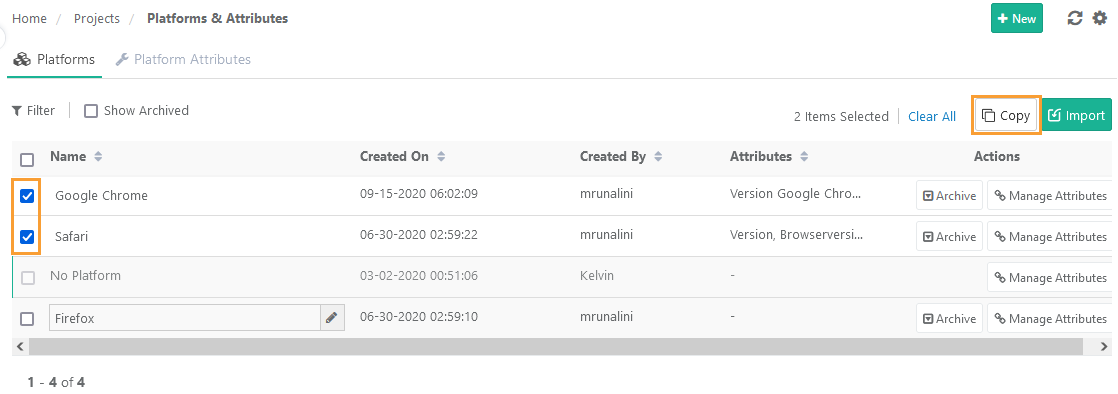
Select the projects on the drop-down list.
Note
View only those projects in the list that you can access.
You can select a maximum of 5 projects at a time.
Select either of the following:
Copy only the Platforms: Copies only the platforms. This excludes the platform attributes.
Copy Platforms and their associated Platform Attributes: Copies the selected platforms along with all their linked platform attributes and their configured field values
Note
You need Customization “View” and “Modify” permissions.
Click .
Note
Duplicate platforms are ignored during the Copy.
View the progress in the Scheduled Task section.
Copy Platforms to Other Projects
To copy platforms, perform the following steps:
Go to Projects and select Platforms.
Select the Platform values to copy.
Note
Select a maximum of 50 Platforms at a time.
Click .
Select Projects on the drop-down list.
Note
View only projects that you have access to.
Select a maximum of 5 projects at a time.
Select either of the following options:
Copy only the Platforms: Copies only the platforms, excluding the platform attributes.
Copy Platforms and their associated Platform Attributes: Copies the selected platforms and all their linked platform attributes, along with the set values of the fields.
Note
Enable this option only if the user has “View” and “Modify” Customization permissions.
Click Copy.
Note
The system ignores duplicate platforms during the Copy.
View the progress in the Scheduled Task section.
Bulk Operations
Carry out the following operations on multiple platforms at a time:
Bulk Archive Platforms
Bulk Delete Platforms
Bulk Unarchive Platforms
Where to find the Bulk Operations feature?
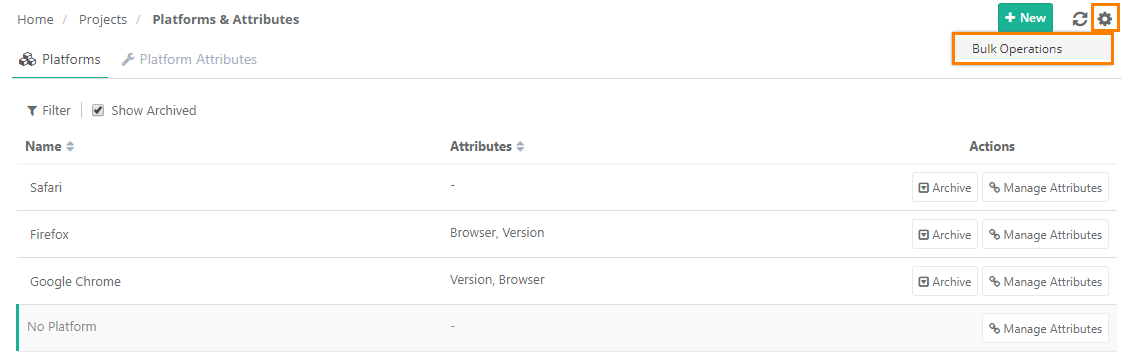
Go to Platforms.
Click the settings icon and select Bulk Operations.
Bulk Archive Platforms
To archive platforms in bulk, select the platforms and click Archive.
Bulk Delete Platforms
To archive platforms in bulk, select the platforms and click the Archive.
On the Bulk Operations sreen, select Show Only Archived.
Select the archived platforms and click delete.
Bulk Unarchive Platforms
Unarchive the archived platforms to bring them in use again.
On Bulk Operations screen, select Show Only Archived checkbox.
Select the archived platforms and click Unarchive.